Standing
Standing is where a roll or match begins. In the gi the fight is about collar and sleeve grips; in no-gi it is wrist, collar-tie and underhook battles borrowed from wrestling and judo. Most BJJ players need a small, reliable set of takedowns, a safe way to pull guard, and solid defence so they are never stuck on the bottom of a bad position.
44 resources
Also called feet, on the feet, stand-up, wrestling for bjj, takedowns.
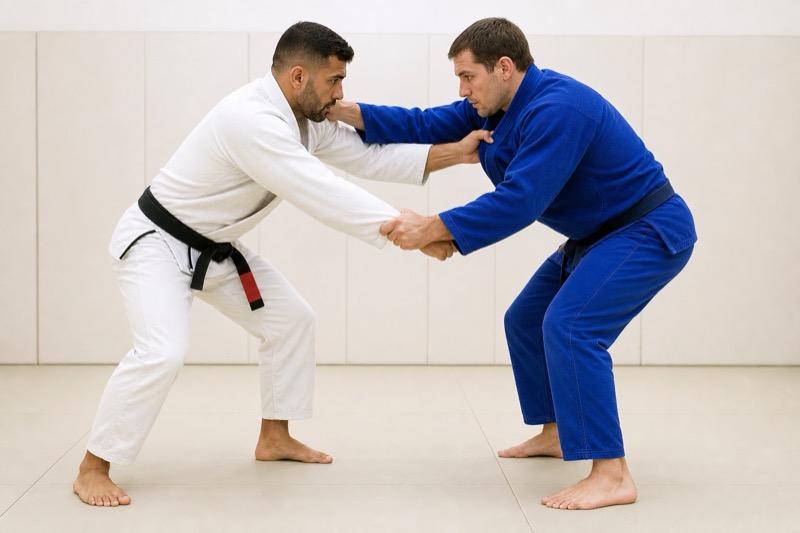
Standing (neutral)
Both athletes on their feet with no dominant grips yet established.
- Grip Fighting Winning the collar, sleeve, wrist and head grips that make takedowns possible and deny them to your opponent. 4
- Takedowns The high-percentage takedowns for BJJ - single leg, double leg, ankle pick, foot sweeps and a few judo throws that work with or without the gi. 17
- Guard Pulls Getting to the guard you want without conceding takedown points or a bad position along the way. 4
- Takedown Defence Sprawls, whizzers, frames and footwork that stop single and double legs and turn them into your own attacks. 3
- Stance and Movement Stance, level changes, distance management and the mindset for the standing phase in BJJ rules. 6
Clinch
Chest to chest or head to head with established grips - the launching point for throws, trips and body-lock takedowns.
- Clinch Control Pummelling for underhooks, controlling the head and hips, and staying safe from throws. 4
- Takedowns from the Clinch Body-lock takedowns, inside and outside trips, and judo throws that start from an upper-body connection. 11
- Clinch Defence Breaking grips, recovering underhooks and getting back to a neutral distance. 4