Open Guard
Before spider, DLR or butterfly there is simply "open guard": the bottom player using their legs to keep the top player away and off balance. This section covers the shared skills - guard retention, seated versus supine play, grip fighting and distance management - and the general sweeps and submissions that do not belong to any single guard.
41 resources
Also called open guard concepts, seated guard, supine guard, guard retention, guarda aberta, general open guard.
Seated Open Guard
Sitting up with your feet between you and the opponent. The default no-gi bottom position.
- Posture, Grips and Distance Hand fighting, wrist control, collar ties and the feet placement that keep a standing opponent honest. 7
- Sweeps and Wrestle-Ups Wrestling up to a single or double leg, arm drag come-ups and hook sweeps from seated guard. 4
- Entries to Specific Guards Turning a neutral seated guard into butterfly, shin-to-shin, SLX, K-guard or DLR. 3
- Submissions Guillotines, front headlocks and leg entries when the opponent bends over into you. 2
Supine Open Guard
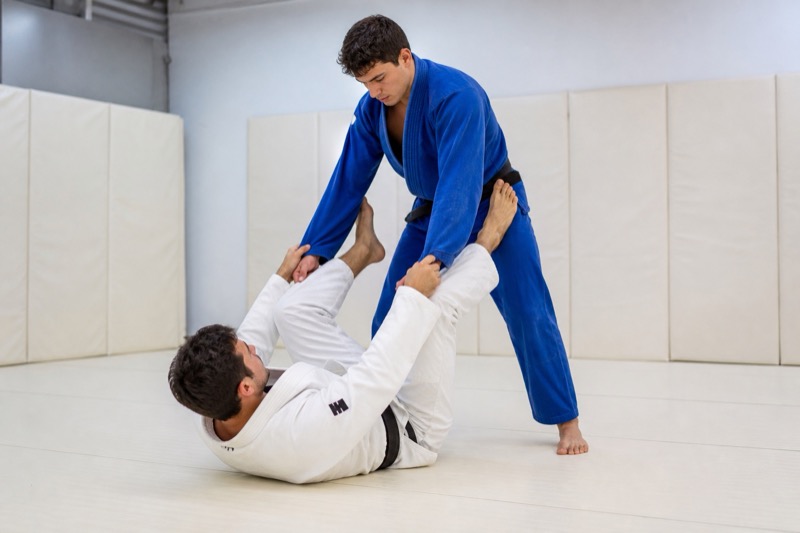
On your back with the legs up as frames. Where guard retention happens.
- Guard Retention Frames, hip escapes, inversion and leg pummelling so the opponent never gets chest to chest. 6
- Distance Management and Feet Where the feet go - hips, biceps, shoulders - to control distance and angles against a standing opponent. 2
- Sweeps Tripod, sickle and tomoe nage style sweeps against a standing opponent. 5
- Submissions Triangles, armbars and omoplatas as the opponent tries to enter and pass. 1
Open Guard Top
You are standing or kneeling against an open guard. Choose a passing style and control the legs.
- Passing Concepts The principles that make every pass work - hip control, inside position, head position and when to stand versus kneel. 5
- Grips and Leg Control Grip fighting on the legs, breaking foot-on-hip frames and pinning the knees. 4
- Passes The main passes against an open guard: toreando, leg drag, knee cut, long step, X-pass and cartwheel. 8