Closed Guard
Closed guard is the first guard most people learn and it remains one of the most complete. The bottom player controls posture with the legs and attacks with sweeps, submissions and back takes. The top player has to stay safe, stand or kneel to open the guard, and pass without giving up an arm or the neck.
62 resources
Also called full guard, guarda fechada, closed guard bottom, closed guard top.
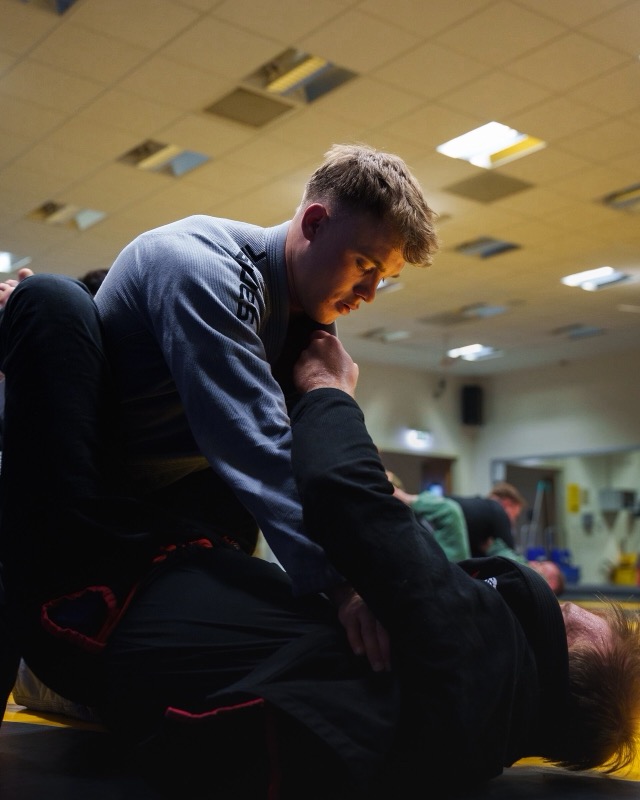
Sky Soldiers conduct Brazilian jiu-jitsu training. U.S. Army photo by Sgt. Jose Lora. Public domain. Source
Closed Guard Bottom
You are on your back with your legs locked around the opponent. Break posture, attack, sweep or take the back.
- Posture Control and Grips Breaking the opponent's posture, controlling the head and arms, and stopping them from standing to pass. 8
- Submissions Armbar, triangle, kimura, cross collar choke, guillotine and omoplata - the classic closed guard attack chain. 21
- Sweeps Hip bump, scissor, flower (pendulum), lumberjack and other ways to reverse a kneeling or standing opponent. 19
- Back Takes Arm drags and hip angles that get you around the opponent's arm and onto their back. 7
- Concepts and Combinations How to link attacks so each defence feeds the next, and how to choose between sweeps and submissions. 5
Closed Guard Top
You are kneeling or standing inside the opponent's closed guard. Stay safe, open the guard and pass.
- Posture and Safety Keeping a strong posture, safe hand positions and hips that do not get swept while you work. 3
- Opening the Guard Standing and kneeling methods to unlock the legs without getting swept or submitted. 6
- Passing After the Break What to do the moment the guard opens - knee cut, double under, toreando or stack passes from the break. 5
- Attacks from the Top Low-risk attacks from inside the guard such as the Ezekiel and can opener, and when they are worth it. 5